
Small Town, Big Gospel
Reclaiming the Global Vision of the Church
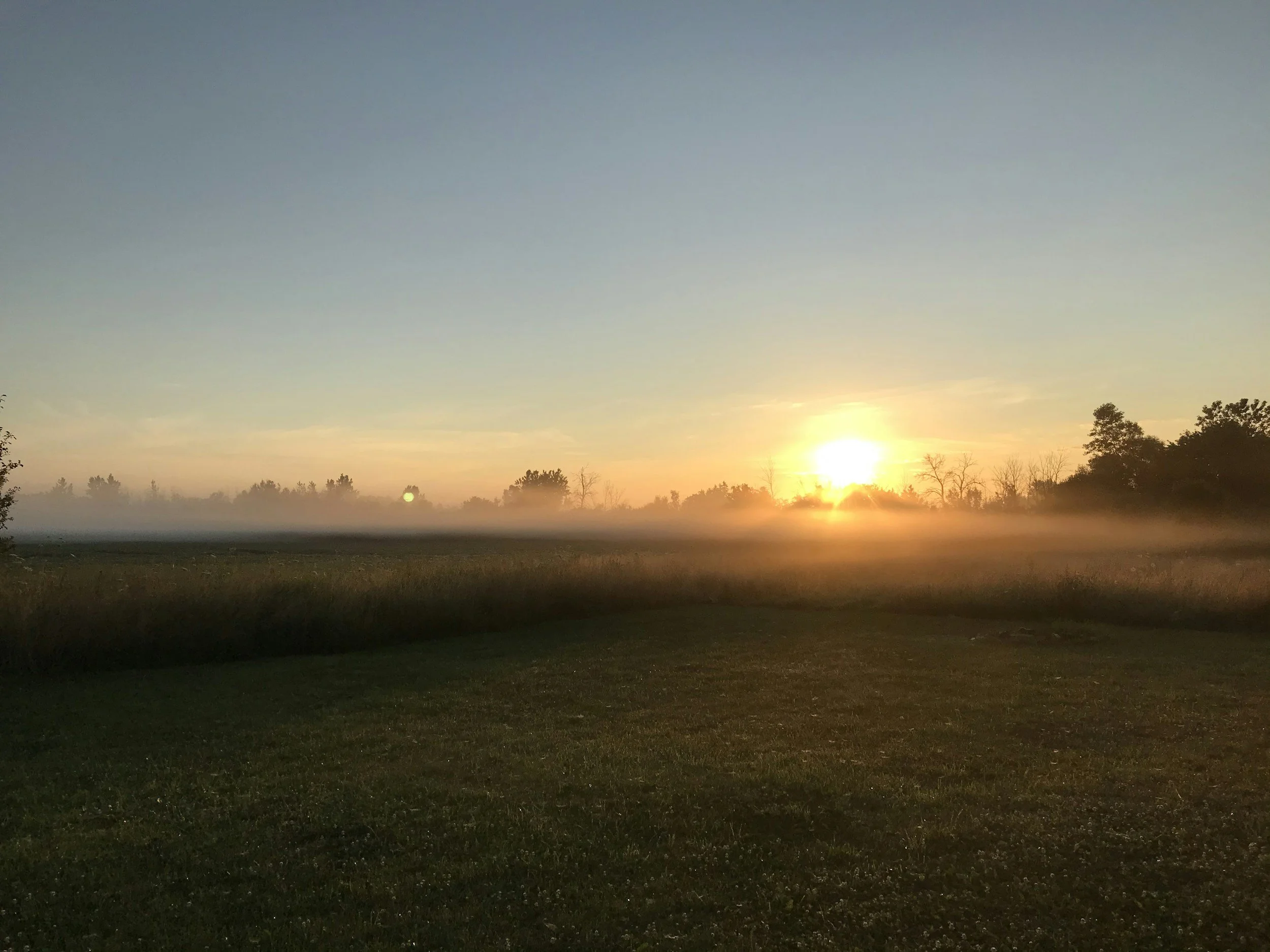
In the summer of 1801, a few hundred settlers gathered near a small meeting house in Cane Ridge, Kentucky, expecting a typical revival meeting. What happened instead would become one of the most significant spiritual events in American history.
Over the course of several days, more than 20,000 people, an almost inconceivable crowd for that time and place, arrived by wagon, on horseback, and on foot. The preaching never stopped. Sometimes from pulpits. Sometimes from stumps. People wept openly. They collapsed in repentance. They sang through the night. And most importantly, they responded to the gospel in droves.
This wasn’t a planned conference. It was a sovereign move of God on the rural frontier, and it marked the beginning of the Second Great Awakening, a movement that would ripple across the country, bring millions to faith, launch reform movements like abolition, and fuel a new era of global missions. And it all started in a field, where the nearest town had a population fewer than 1000 people.
The Potential of Small Places
If God could do that in Cane Ridge, why not in Clearfield? I live in a rural town myself, in Clearfield County, Pennsylvania, not far from where A. W. Tozer was born. And if you spend any time here, you’ll hear that fact mentioned more than once. It’s not just local trivia, it’s a subtle way of saying, “This place matters too.”
I get it. I grew up in New Jersey, and while the state has its claims to fame, my town didn’t have much to brag about. That is, until Weird NJ, a quirky magazine about odd local legends, started featuring it. We finally had our claim to fame. Small towns tend to latch onto the things that make them feel seen: a local athlete, a ghost story, a famous person who once passed through. But what if the thing your town is known for isn’t from the past? What if it could be known for something that’s just beginning, something that will echo far beyond its borders?
The Nature of Rural Life in a Shrinking World
Rural people may travel to shop or take the occasional vacation, but their world is shaped by what’s close by, what’s familiar. They care deeply about local drama, not global headlines. That’s not apathy. That’s just rural reality. A friend of mine once said, “No matter who’s in the White House, my life doesn’t change. I get up, go to work, and take care of my family.” And he’s not wrong. The 2008 stock market crash? It barely touched us. 9/11? It was devastating, but still, it felt like it happened in someone else’s world. Rural communities often ride out the storms and celebrations of national life like waves from a distant shore.
But something has shifted. Social media has shrunk the world. Now, rural folk are no longer behind by a decade on popular trends. We are more connected than ever. Strangely, though, that connectedness has insulated us even more. We carry the illusion of awareness, but our lives remain unchanged. We know what’s happening out there, but if we’re honest, it doesn’t have anything to do with us.
That’s the tension: we see more, but we act less.
Generational Loyalty, Local Pride, and the Challenge of Perspective
This tension shows up in our fierce loyalty to our communities. We cheer for our state teams, but we worship our local ones. We track the same family names across generations. We notice who leaves, and when they come back, it feels like something sacred. Like they’ve returned to what’s real. As if their homecoming confirms what we’ve believed all along: the outside world may have flash and fame, but this place is home.
There’s deep beauty in that. But there’s also risk. Because when we wrap our whole world in one zip code, we lose sight of what God might be doing beyond it. Not just in place, but in time.
So, how do we help people think globally when their entire lives are built around their county line? We start by helping them remember the gospel that changed them. We’re not trying to guilt rural people into caring about missions or overseas churches. We’re trying to remind them that they are already part of a bigger story, a story that began in a backwater town called Nazareth, with a carpenter and a handful of fishermen, and God used them to change the course of history.
Jesus’ movement didn’t start big. It started local. But it didn’t stay there. “You will be my witnesses in Jerusalem and in all Judea and Samaria, and to the end of the earth” (Acts 1:8). That’s the pattern. Local. Regional. Global. If 120 disciples gathered in the upper room can launch a movement that reached the world, why not 120 people in your small rural town?
They don’t have to move to New York, L.A., or London. They don’t even have to leave the community they’re in. But they do need to believe that the gospel isn’t meant to stay in the bubble. It’s meant to break out. Beyond them. Beyond their church walls.
When Small Places Matter
Every so often, a hometown hero makes it big. An athlete gets drafted. A singer makes it to Nashville. A small-town entrepreneur goes national. And when it happens, the town doesn’t just celebrate the person. They celebrate the validation: “We matter, even if the world forgot us.”
That’s exactly what the gospel does. It takes people and places the world overlooks and uses them to declare the glory of God to the ends of the earth. Not because of any material success or cultural fame. Because rural people matter to God. God’s shown us before, in Cane Ridge. With farmers. With settlers. With no microphones or media. God doesn’t need a platform. He just needs people willing to respond.
The goal isn’t to get your whole church on a plane. It’s to help them understand they are part of a greater narrative. One beyond their bubble. One that matters, maybe not to urban folk. Maybe not to the media. It matters to God. Help your people see that the gospel isn’t just something that changed them, it’s something that moves through them. Jesus doesn’t need centers of influence to make an impact. He just needs faithfulness in small places.
Your church may never be written into the history books as the spark of a great awakening. But your small church, in your small town, can still be part of something far bigger than you ever imagined.
So, embrace the mission of the gospel and your place in the story God is writing. Because in His narrative, your church is not forgotten. It’s being written in, on purpose, for a purpose.

Anthony Caiola
Anthony is a pastor, church planter, writer, and consultant who helps churches and leaders build healthy, mission-driven organizations. He serves as the Lead Pastor of Awaken 514 Church and works as a real estate entrepreneur and nonprofit leader, coaching teams to align values, systems, and culture for lasting impact. Originally from the New York Metro area, Anthony now lives in rural Pennsylvania with his wife and two children.
